“Reflective conservation practitioners part of a thinking community” ..
As I work at the Three Waters Reserve I get the sense that this is exactly what is happening here! Leopolds’ vision in action. Not only are we reflecting on what it means to create an environmental education program that demonstrates the values and goals of the organization-we are all part of this community of like-minded individuals working towards a common goal.
The theme, “Get to Know Your Watershed!” was developed by the LSRWA to foster land stewardship. Communicating land ethic through educational programs, events and recreational activities is one way to deliver the message. The overarching theme and goal of the educational programming plan (my project) for the new Environmental Science Center is to emphasize that the land is an equal part to the community.
The land is equal to your house, neighbors, yard, schools, stores, institutions and places of work and worship. I found my land ethic draft from our first two weeks in class and the photo from the Shack visit. The year has flown by! Looking at the land ethic I wrote last June, it still seems to fit, but perhaps now it means so much more.
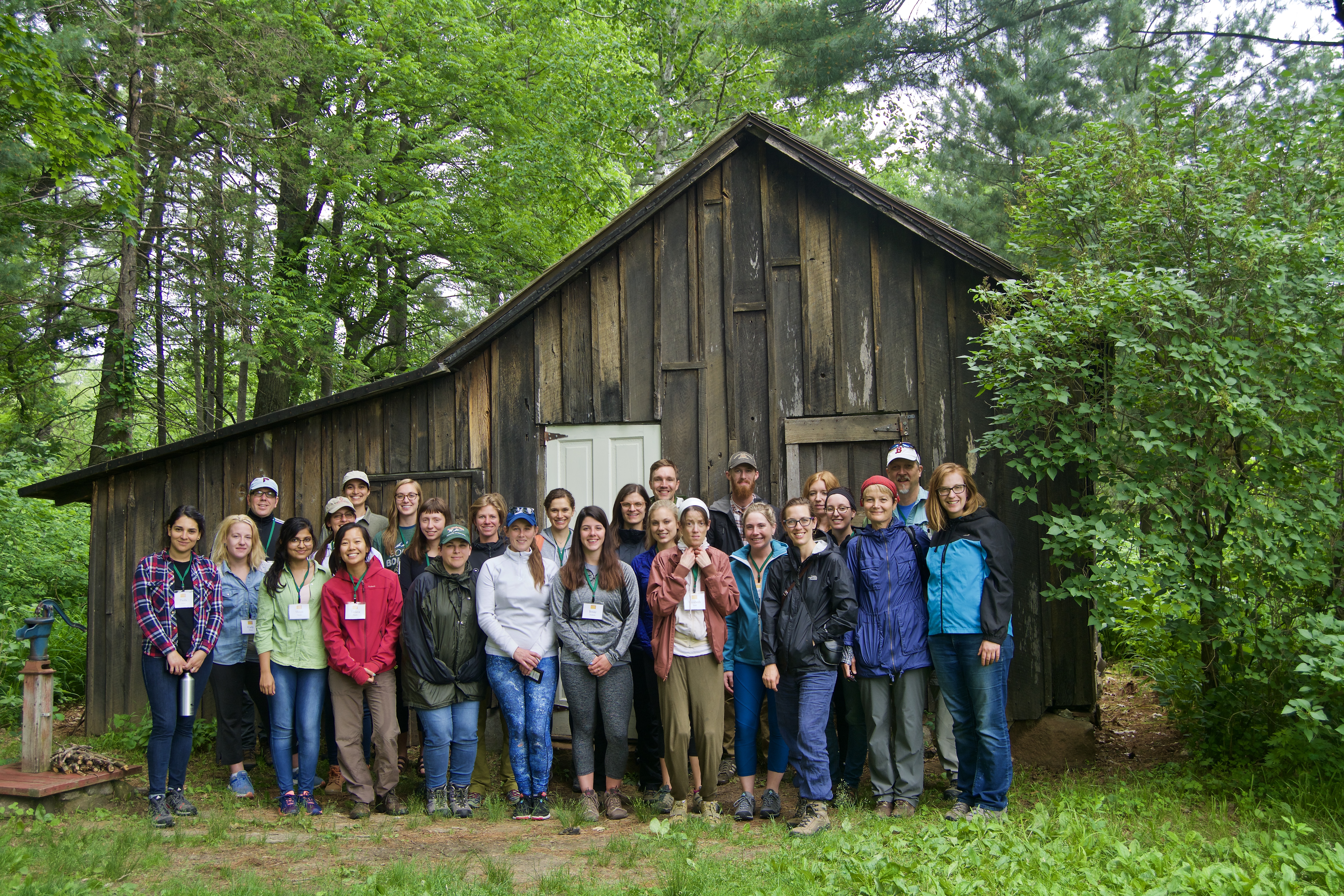
June 9, 2018
“Consider the interdependence of humanity and the planet. Use imagination and reflection to guide decision making processes. Use scientific knowledge and the nature of nature itself to find solutions. Listen to each other and the land to reconcile the past – protect and preserve the future of our land and community.”
Meeting new people and lots of planning!
I’m writing a timeline for the Education Plan which is now anticipated to be implemented in Spring of 2020.
This week I met (by phone) Amber Horbovetz, who works for Applied Ecological Services in Indiana. She is also responsible for creating environmental education materials and curriculum for the Dunes Learning Center – a part of the Indiana Dunes State Parks. She has been sharing all of her work including curriculum for teaching about plants and animals, climate change, watersheds, nature games and activities for kids. She’s also developed several nature camps that are a yearly favorite at the Dunes Learning Center. Amber is a wonderful resource! I will be working with her over the next several weeks to get ideas for programs and learn about how she put all of her programs together.

We’ve also got meetings planned with the principals from Brodhead School District next week to start discussing how the Lower Sugar River Watershed Science Center can be their teaching and learning resource.
I’ve written a draft child safety and protection policy for the Center and I’m anticipating writing more staff training manuals and policy statements along with the education plan work.
Looking forward to our meeting with the principals next week and staying busy researching existing environmental education centers in the state and the Midwest looking for how they have modeled their programs. Until July, have fun everyone and enjoy the experiences you are having!
 The Nelson Institute: Environmental Conservation Leadership Projects