My placement is with the Wisconsin DNR, specifically assisting them with the elk reintroduction project. The elk population was depleted due to over-hunting in the 1940s, so this is a chance to restore their population to its naturally occurring range. The DNR’s goal is to reintroduce 150 elk over a 5 year period. (https://dnr.wi.gov/topic/wildlifehabitat/elk.html )
2019 marks the 5th and last year of elk translocation from Kentucky into two regions in northern Wisconsin; Clam Lake and Black River. But my placement will not be focusing on current efforts, rather I’ll be creating maps from the 2017 release of 31 elk in the Clam Lake region into Flambeau River State Forest.
A bicycle (local primary mode of transportation) outside of a home in Lund, Sweden.
Hej kompisar (hello, friends)!
My summer leadership placement takes place in southern Sweden in the cities of Malmö and Lund. Over the course of my 8-week internship with the Worldwide Fund for Nature (WWF) Global Cities team I will be developing a Massive Open Online Course (MOOC) in collaboration with the International Institute of Industrial and Environmental Economics (IIIEE) at Lund University. Now that all of those acronyms are out of the way, I can say a bit about this exciting project! The MOOC will be designed to reach a primary audience of local governments in the global south that wish to learn how to make sustainable energy transitions in cities. The focus of the MOOC will be energy solutions in cities in alignment with the Intergovernmental Panel on Climate Change (IPCC) (last acronym for now, I swear!) goal of limiting global temperature rise to 1.5°C.
Bull elephant, approximately 45 years old, calmly watches me while browsing. Four other males were next to him as well but were a little more camera-shy. PC: L. Cleaveland
Who Am I Working With?
For my placement, I am working in Gaborone, Botswana with the Kalahari Conservation Society (KCS), the country’s oldest nonprofit conservation organization. My advisor Nathan Schulfer and Program Coordinator Meghan Kautzer, approached me with the idea of collaborating with KCS as the Nelson Institute had begun a relationship with the nonprofit, Botswana’s former President, and the Minister of the Environment when Schulfer attended the Giants Club Summit, a conference centered around elephant conservation and necessary actions needed to reduce the ivory trade.
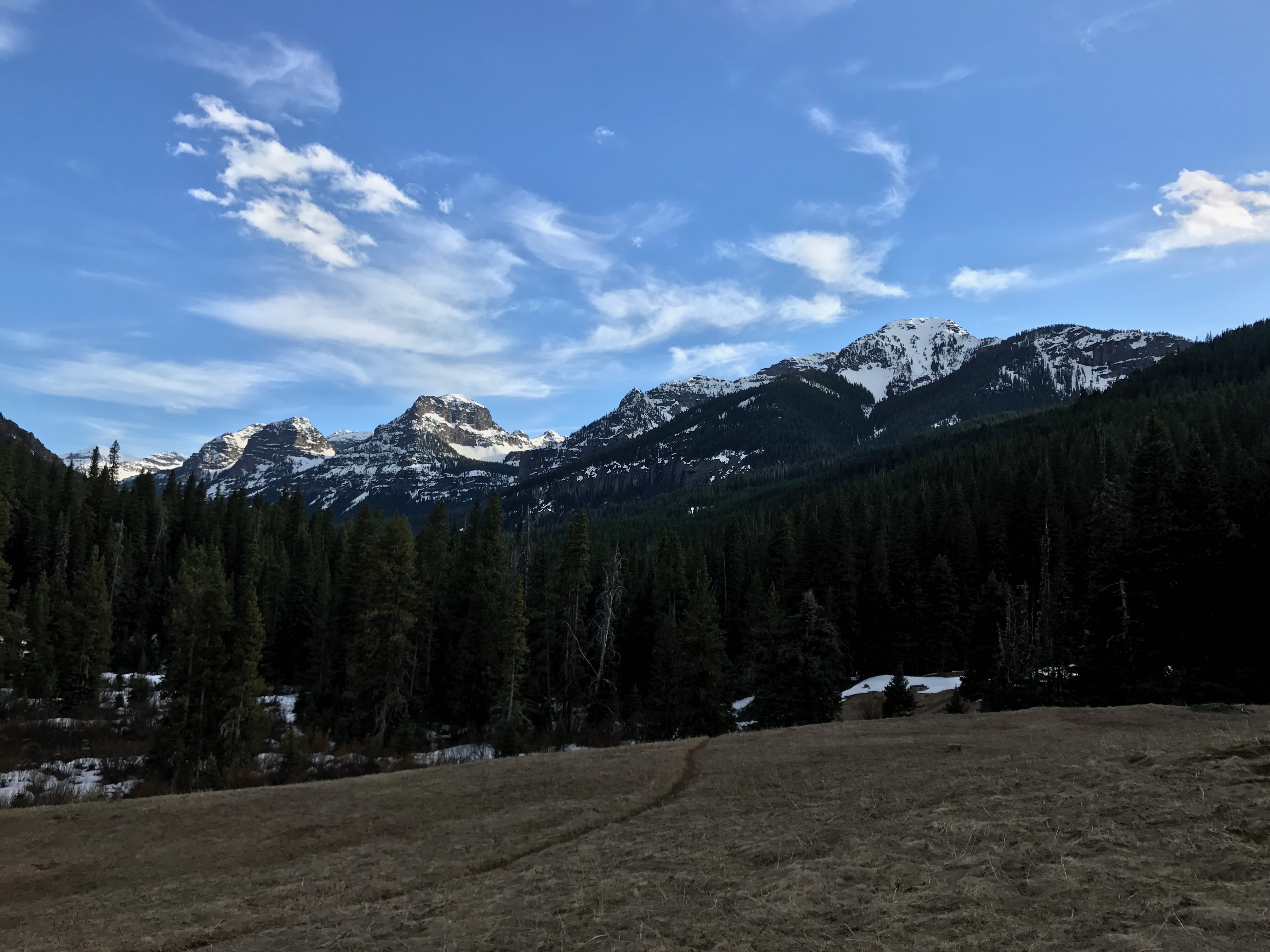
My placement is with the Yellowstone to Yukon Conservation Initiative (Y2Y) and I am based out of Sandpoint, Idaho which is in the northern pan-handle of Idaho near the Canada and Montana borders. Y2Y is a joint Canada – U.S. non-profit organization that connects and protects habitat from Yellowstone National Park to the Yukon Territory so that nature and people can thrive (Y2Y Vision and Mission Statement). My placement revolves around the central components of how Y2Y is defining and measuring ‘success’ of their conservation efforts. There are two components to my project 1) Internal Metric Review and 2) Review of the Collaborative.
Clean Lakes Alliance (CLA) was founded in 2010 and their goal is “to raise community awareness of the issues facing the watershed, advocate for the welfare of our lakes, and help procure the necessary funding to clean and protect these waterways.” According to the annual report, phosphorus input greatly impacts the water quality in the lakes of Madison because it triggers algae bloom events. CLA relies on donors and partnerships to address this issue and community outreach is an essential component of their programs in order to get people to care about the lakes, raise money, and benefit from the work of volunteers.
This summer my research project will be focused on performing call surveys at night for several focal species King , Black, & Yellow Rails as well as Least Bitterns across the state of Wisconsin. I have 18 total field sites with varying numbers of waypoint locations, where I actually perform the surveys between 10 pm-3 am for Yellow Rails and 10pm- 7 am for King/Black Rails. A survey consists of five minutes of passive listening once I reach each waypoint to determine what birds are immediately calling. Then I play 30 seconds of each breeding call then listening 30 more seconds to see if the species responds. If a bird responds, it is considered an observation. Each survey site will be revisited at least after two weeks theoretically to determine if the species are staying in the area to do their breeding. So I will complete a total of 36 field survey visits over a course of seven weeks as my field season is May 21st to July 7th. So far, it has been an interesting ride…
My summer leadership placement will be spent at the Region 1 offices of the U.S. Fish and Wildlife Service (FWS), based out of Portland, Oregon. During the Obama administration, a new division of the FWS was created called Science Applications. Their main role is to integrate climate change science into the regular tasks of the FWS, including thinking about large-scale habitat connectivity. To achieve this, funds were dedicated to the creation of Landscape Conservation Cooperatives (LCCs) across the country, managed by Science Apps employees. This is how the Pacific Northwest Coast Landscape Conservation Design Initiative was established. My supervisor, Tom Miewald, has been thinking about large-scale connectivity since the LCC’s creation, even when funding for all LCCs was cut in 2016. Continue reading C3: Communicating Coastal Connectivity→
I’ve never seen such respect for an unwritten rule as that for standing on the right and walking on the left of an escalator in D.C. I quickly learned this norm taking the blue-line metro from the land of black suburbans to Crystal City on the first day of my internship with Conservation International (CI). On top of the vast array of free coffee, a meditation room, and free-for-all desk selection each day because so many people are traveling the world, CI is doing truly great work to ensure the resilience of our planet.
Developing Environmental Education Programming – Fostering Connections to Watershed Ecology
Three Waters Reserve – formerly Decatur Lake Golf Course – Brodhead WI
An Ecological Restoration
Nestled between rolling agricultural fields and the meandering Sugar River in Brodhead Wisconsin lies an environmental diamond in the rough. Welcome to the Three Waters Reserve – a new 57 acre public conservation park located on the former Decatur Lake golf course.
The Southern Wisconsin Land Conservancy (SWLC) ,and other generous philanthropists, have partnered to purchase this ecological gem of a property and are restoring it to its natural splendor. Restoration work has begun on this ecological gem!
For my project placement, I will be working at The Nature Conservancy’s (TNC) Portland, Oregon office, where I will help develop a strategy for implementing Natural Climate Solutions (NCS) in Oregon. NCS focus on developing partnerships between governing agencies, landowners, business and other stakeholders to increase the carbon sequestration potential of land. This can take many forms: better forestry and agricultural practices, tree plantings on marginal land, improved wetland management and better fire management and prevention, to name a few. I will be assisting with stakeholder research, policy research and a literature review of the efficacy of past NCS incentive programs in support of the project team. I may also assist in an effort to develop pro-NCS messaging in support the Natural & Working Lands Challenge, a project of the U.S. Climate Alliance focused on developing carbon sinks on natural and working lands.






 The Nelson Institute: Environmental Conservation Leadership Projects